
Planning
Objective, date, audience, source, format, destinations and risks are defined before configuration.
ASAWEB GUIDE
The difference lies in the operation: planning, stability, distribution, monitoring and response when the content cannot simply stop.
Direct answer
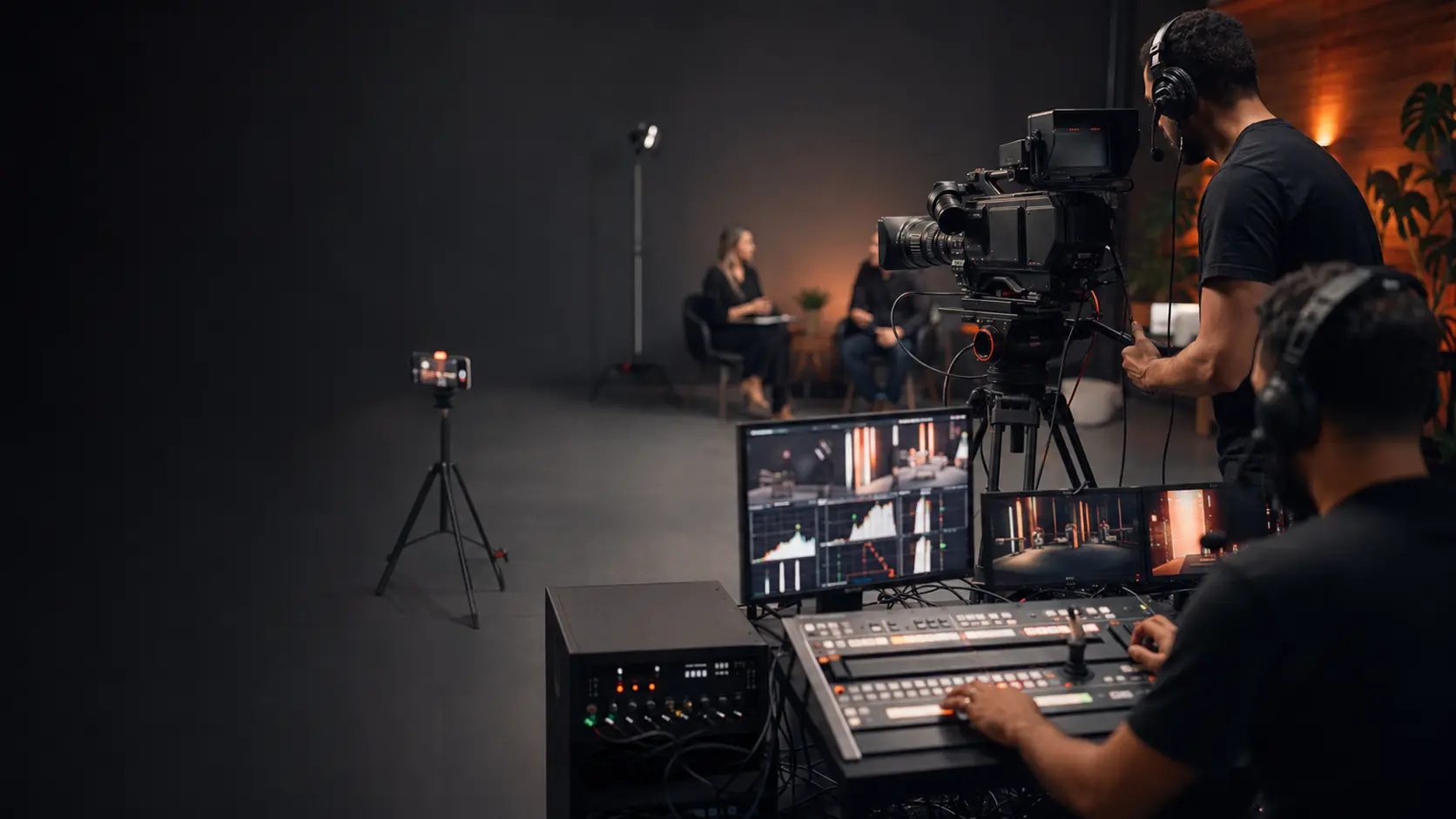
An ordinary live usually connects one source directly to a platform. Professional streaming organizes the full chain—capture, encoding, internet, platform, player, destinations, monitoring, support and contingency—according to the importance of the broadcast.
Short answer
An informal meeting, quick conversation or experimental piece may work well with a phone and a social platform. A conference, recurring service, 24/7 channel, assembly, launch or auction requires every dependency to be understood before going live.
Professionalizing does not mean making everything complex. It means sizing what matters so the team knows who owns each stage and what to do when conditions change.
Comparison
Professional operation
Objective, date, audience, source, format, destinations and risks are defined before configuration.
Cameras, audio, encoder, upload, protocol, platform, player and devices are treated as a system.
The signal is observed to identify loss, quality degradation or interruption early.
Alternative connectivity, spare equipment and responsibilities can be planned according to risk.
Website and compatible social destinations are organized without multiplying capture.
The service workflow matches the time at which the operation actually happens.
Decision
Briefing
Conclusion
Not every broadcast requires the same architecture. A mature decision avoids both improvisation in critical projects and excess structure in simple ones.
AsaWeb begins with context to recommend a chain compatible with the content, audience and impact of downtime.
NEXT STEP
Share the format, date, audience and destinations. AsaWeb will help organize the next step.