
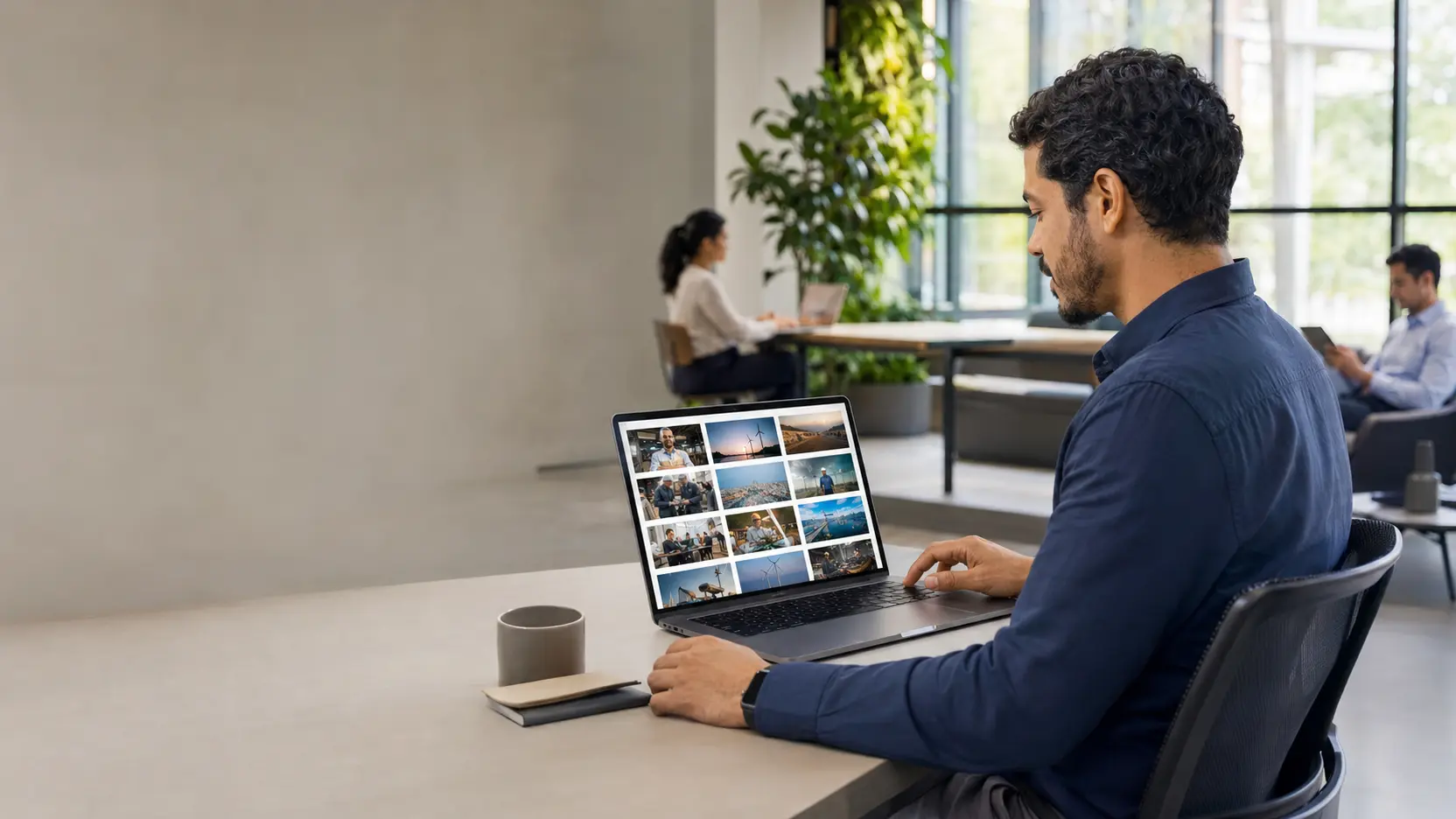
Recorded content creates value only when it reaches people in the right context.
Structure the distribution of classes, training, institutional videos and libraries so audiences can watch when they need to.
Direct answer
Video on demand, or VOD, makes recorded content available for later access. It is suited to distance learning, corporate training, institutional communication, outreach projects and audiovisual libraries.
Value after recording
Recording is only the beginning.
Many companies collect classes, meetings, training and institutional videos without a consistent distribution method. Content becomes scattered, depends on manual delivery or loses value over time.
AsaWeb helps turn that collection into a VOD operation aligned with the objective, audience and digital environment.
Applications
Where VOD can be used
- 01Courses and distance-learning platforms
- 02Team training and onboarding
- 03Internal communication
- 04Institutional videos and presentations
- 05Event and congress libraries
- 06Church, association and cultural content
- 07Libraries of TV programs and digital channels
Project
Access should follow the purpose of the content
Before defining the solution, it is important to understand who will watch, where, for how long, on which devices and whether the project connects to a website, restricted area or education platform.
Specific access controls, authentication, reports, storage and integration must be confirmed in the proposal. Public communication does not promise features absent from the contracted product.
FAQ
Frequently asked questions
Is VOD the same as live streaming?
No. VOD content is recorded and accessed later; live streaming is watched while it happens.
Can I use VOD for distance learning?
Yes. Platform integration and required controls must be assessed.
Can an event recording be made available?
Yes, when recording, file preparation, storage and access are included in scope.
Can the content be protected?
Access and protection options vary by solution and must be technically validated before the proposal.
NEXT STEP
Your library can keep teaching, informing and creating value after recording.
Tell us what video you have, who needs to watch and where it will be used.